Manual vs Automated Backtesting: Which One Should You Use?
Automated backtesting tells you whether a set of rules made money. Manual backtesting tells you whether you can trade them. A practical comparison of what each one tests, what it costs you in time and skill, and which to reach for first.
Both approaches answer a question about your strategy. They answer different questions, and picking the wrong one wastes weeks.
This is a practical comparison: what each one actually does, what it costs you in time and skill, and which to reach for depending on what you are trying to find out.
The short version
| Automated | Manual | |
|---|---|---|
| What it answers | Did these rules make money? | Can I trade these rules? |
| You supply | Code | Screen time |
| Speed | Years of data in seconds | Years of data in weeks |
| Sample size | Unlimited, cheaply | Limited by your patience |
| Needs | Programming ability | Discipline |
| Catches | A statistically dead strategy | A strategy you cannot execute |
| Blind to | Whether you can follow it | Whether it scales across every market |
When automated is the right tool
Your rules are fully mechanical. If every entry and exit can be written without a judgement call, a machine can test them, and it should. Making a computer do this is faster and more thorough than you will ever be by hand.
You want to sweep parameters. Testing 40 variations of a moving-average length is a job for software. Doing it by hand is not diligence, it is a waste of a week.
You need breadth. Fifty symbols across twenty years is a reasonable ask of a script and an unreasonable ask of a person.
You are checking whether an idea is dead. If a strategy loses money across a decade of data, you want to know that in an afternoon, not after a month of clicking.
When manual is the right tool
Your rules involve judgement. Most discretionary strategies do. "Wait for the level to hold" and "only if structure agrees" are things traders recognise and struggle to encode. A backtest that omits the judgement is not testing your strategy.
You have never traded the strategy. A report saying max drawdown 8% does not tell you what an 8% drawdown does to your decision-making. Sitting through it does.
You suspect the problem is you. If your strategy tests well and loses live, the gap is execution. Automated testing cannot see that gap, because it removes you from the equation. Manual testing puts you back in it and shows you what you actually do under pressure.
You cannot code. This is a real constraint and not a shameful one. Manual testing needs no programming.
The honest tradeoffs
Manual is slow. You will not test twenty years across fifty symbols. Accept a smaller, deeper sample.
Manual is vulnerable to your own bias. Knowing what happened next is a real risk, which is why stepping bar by bar rather than scrolling matters, and why testing on periods you have not studied matters more.
Automated is only as honest as its assumptions. A backtest with no spread, no commission and no slippage produces a beautiful equity curve for a strategy that loses money. Costs are where most automated results quietly fall apart.
Automated does not survive contact with you. The most common way a validated strategy fails is that its owner abandons it three losses in.
Most traders should use both
The efficient order is automated first where possible, manual second.
Use a script, or someone else's, to find out whether the idea has any edge at all. If it does not, you have saved yourself weeks. If it does, switch to manual and find out whether you can actually trade it, because that is the part that decides whether the edge reaches your account.
If your strategy cannot be automated in the first place, which is true of most discretionary approaches, manual is not the fallback. It is the only test that applies.
Where ChartLabs fits
ChartLabs does the manual half. You step through historical data candle by candle, place market, limit and stop orders with your stops and targets, and every trade is logged with full analytics behind it.
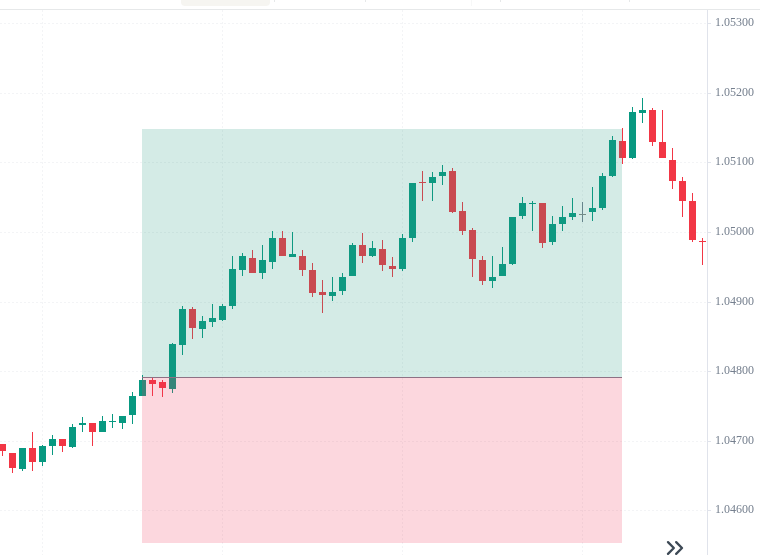
We do not offer automated backtesting, and we are not trying to. There are plenty of tools for that half, and far fewer that make the manual half reliable enough that traders actually do it.
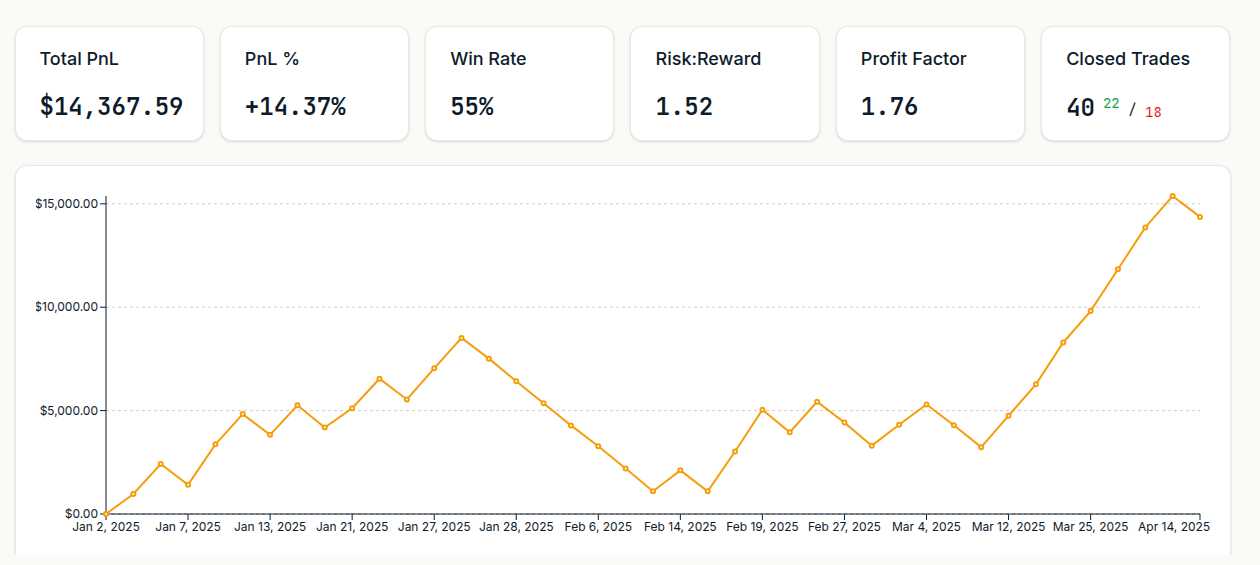
Data depth runs to around 22 years on the oldest forex pairs, with other instruments starting later. One plan, $20 a month, with a 7-day free trial and no credit card required to start.